
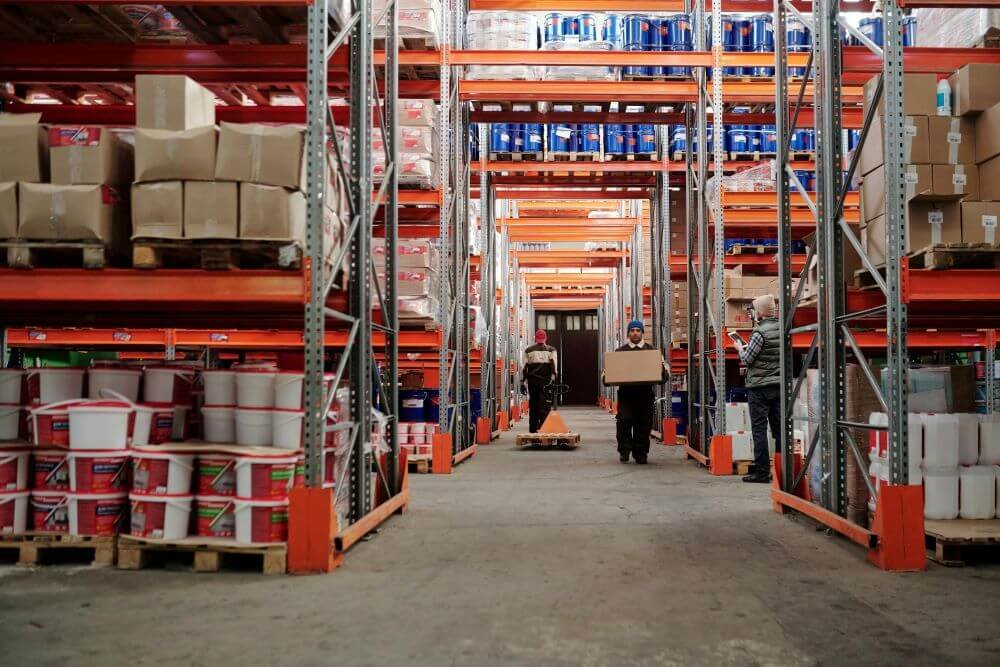
Ever wonder how your online order makes it from a factory floor in Vietnam to your porch in Des Moines without vanishing into a black hole of backorders and delays? The answer sits deep inside distribution systems—those often invisible but absolutely critical frameworks that keep businesses running and customers satisfied. In this blog, we will share how organizations strengthen their distribution systems in response to today’s growing pressures.
Distribution Is the Business Now
Ten years ago, distribution was the unsexy backend of operations. Most companies treated it like plumbing—necessary, but best left alone until something broke. That mindset doesn’t fly anymore. In the post-COVID world, distribution is front and center. Supply chain delays made headlines. Empty shelves became national news. And every business leader who previously saw logistics as a background task learned a hard lesson: if your product can’t move, your business can’t grow.
Today’s customers expect speed, visibility, and reliability. Whether they’re ordering a single candle or managing a wholesale furniture deal, they want to know where their product is, when it will arrive, and how to track it in real time. That’s not a trend—it’s the new standard. Organizations that want to compete in this environment have had to rethink the entire structure of how goods get from point A to point B.
One way they’re doing that is by securing their own physical infrastructure. Warehouses, cross-docks, last-mile hubs—these aren’t just nice-to-haves anymore. They’re control points. And with freight prices still unstable and port congestion lingering, more companies are getting creative. Many are scooping up shipping containers for sale to use as mobile storage units, temporary warehouses, or even modular fulfillment centers. The appeal is obvious: they’re weather-resistant, stackable, and surprisingly adaptable.
Rather than waiting for traditional warehouse space to open up—or overpaying for it—businesses are creating flexible, scalable networks using containers as plug-and-play assets. This strategy isn’t limited to startups or scrappy importers. Major players in retail, construction, and manufacturing have begun treating containers as core parts of their distribution systems. They’re buying, customizing, and deploying them in strategic spots to reduce bottlenecks and respond faster to shifting demand.
It’s not just about storage anymore. It’s about agility, and containers offer exactly that. They allow businesses to pivot, expand, or shift operations without the overhead and red tape of conventional real estate. For a world still recovering from supply shocks, this kind of mobility gives companies a real edge.
Regionalization Beats Global at Speed
For years, the dominant logic in distribution was clear: source cheap, ship long, and scale globally. But that logic cracked during the pandemic. Suddenly, dependence on far-flung suppliers became a liability. Delivery timelines stretched from days to months. Organizations that had bet everything on centralized, global supply chains found themselves scrambling for alternatives.
That scramble led to a bigger shift: regionalization. Companies are now building smaller, more localized distribution hubs closer to end customers. Not just to hedge against disruption, but to deliver faster, reduce transport costs, and respond more precisely to local demand.
Look at how retailers like Target or Walmart now manage inventory. Instead of moving products from massive central warehouses, they’re pushing them to micro-fulfillment centers or even repurposing store stockrooms for local delivery. These moves shrink lead times and give teams better control over product availability.
Manufacturers are following suit. From automotive to pharmaceuticals, industries are rethinking where and how they produce goods. Some are reshoring. Others are nearshoring—shifting production to nearby countries with shorter transit windows. The old model of chasing the cheapest labor is losing ground to a new priority: resilience.
And it’s not just about where stuff gets made. It’s about where decisions get made too. Regional operations teams are being empowered with more autonomy. They’re adjusting inventory based on local data, coordinating with nearby partners, and cutting the lag between problem and response. It’s a decentralization of not just goods, but control.
Data Isn’t Just a Tool—It’s a Lifeline
At the core of every strong distribution system now sits data. Not in spreadsheets or post-mortems, but in real-time dashboards, AI-powered forecasting tools, and predictive analytics engines. Organizations are investing heavily in digital infrastructure to improve visibility and anticipate issues before they happen.
What used to be managed by gut instinct is now guided by sensor data, machine learning, and detailed flow models. Is that shipment running late because of weather or a labor issue? Should we reroute inventory to meet demand spikes in one city? How do warehouse pick times compare across locations? The answers are no longer hidden—they’re immediate.
This shift also means supply chain teams are getting a seat at the executive table. What was once a back-office function is now shaping strategy. Companies aren’t just reacting to shipping delays—they’re using data to prevent them, reroute around them, or optimize delivery windows for better customer satisfaction.
Data doesn’t remove complexity. But it makes complexity manageable. And the companies that learn to treat their distribution networks as living systems—constantly adapting, constantly monitored—are the ones that stay ahead.
Talent Isn’t Behind the Curtain Anymore
For years, the people who made distribution work were largely invisible—warehouse workers, forklift drivers, logistics coordinators. The pandemic changed that. Labor shortages, safety concerns, and wage debates pushed these roles into the spotlight. And companies that ignored this shift paid for it in delays, missed quotas, and lost contracts.
Now, the conversation around distribution talent has shifted from cost to value. Companies are rethinking how they hire, train, and retain logistics workers. They’re investing in better tools, safer work environments, and clearer career paths. Automation is part of the conversation, but it’s not a full solution. Robots may pick faster, but they still need people to keep systems running and solve problems on the fly.
At the same time, tech skills are now vital inside supply chain teams. Data analysts, systems integrators, logistics engineers—these roles are shaping how organizations grow. It’s not enough to understand shipping rates. Teams now need to understand network modeling, API integrations, and demand simulations. The skill set has expanded, and smart companies are expanding their teams to match.
In the end, a strong distribution system isn’t built on equipment alone. It’s built on people who know how to make that equipment sing.
Organizations that once treated distribution as an afterthought are now treating it as strategy. From modular storage solutions and localized networks to real-time data and better partnerships, the entire logic of moving goods is being rewritten. And the companies who adapt fastest—who build systems that flex and respond—aren’t just improving delivery times. They’re building futures that actually show up on time.