
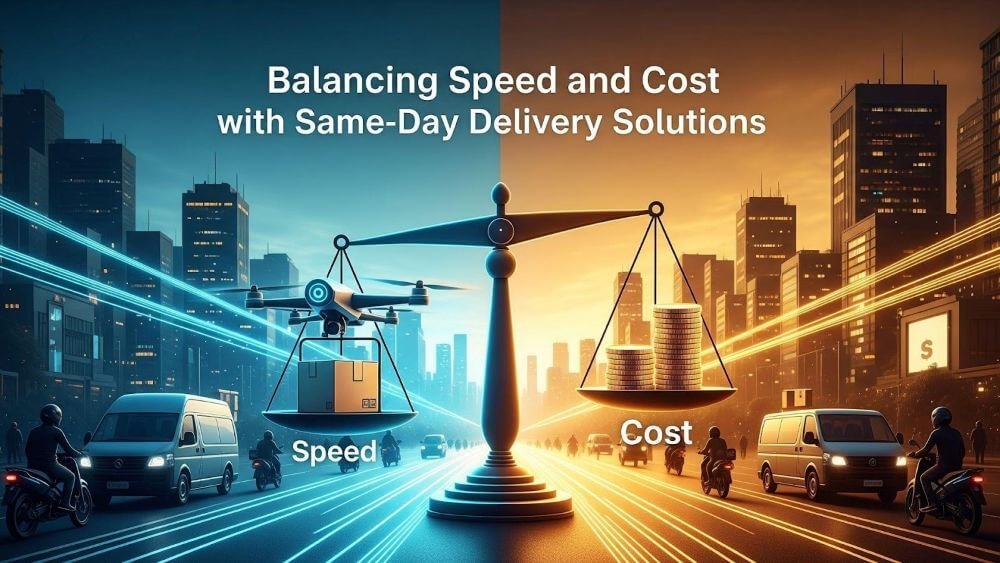
Same day delivery has become a powerful lever for Australian businesses competing on customer experience.
Shoppers increasingly expect faster fulfilment, particularly in metropolitan areas, but speed comes at a cost.
The challenge for businesses is finding same day delivery solutions that meet customer expectations without eroding margins.
Striking the right balance requires clear strategy, realistic promises and strong operational discipline.
Why speed matters to Australian consumers
Same day delivery appeals to customers who value convenience and immediacy.
In urban Australian markets, fast delivery can influence purchasing decisions, especially for time sensitive products such as gifts, health items and essential household goods.
When customers know they can receive an order within hours, hesitation at checkout often disappears.
However, speed with a good same day delivery order alone does not guarantee satisfaction.
The customers also expect accuracy, clear communication and reliable delivery windows alongside anything else.
A delayed same day delivery can feel worse than a dependable next day option.
Businesses need to ensure that faster delivery improves the overall experience rather than introducing frustration.
Better Costs with Same Day Courier Services
Same day delivery and courier services typically relies on local courier networks rather than national line haul services.
These couriers charge higher per order rates due to shorter notice, lower drop density and increased flexibility, all while making it sometimes difficult for the customer.
Australian businesses must account for these fluctuations when evaluating same day delivery solutions.
Locking in fixed pricing or guaranteed capacity with courier partners can reduce volatility, but often requires minimum volume commitments.
Speed places pressure on internal operations. Orders need to be picked, packed and handed off quickly, often within minutes of purchase.
This can increase labour costs, require extended staffing hours or disrupt standard warehouse workflows.
Technology investments also play a role. Order management systems, real time inventory visibility and delivery tracking tools all contribute to the cost base.
While these systems improve efficiency, they need to be factored into any same day delivery business case.
Designing smarter same day delivery solutions
One way to balance speed and cost is to limit where and when same day delivery is offered.
Focusing on high density metro areas allows couriers to complete more deliveries per run, lowering the cost per order.
Clear postcode eligibility checks help manage expectations and protect profitability.
Time based restrictions are equally important. Offering same day delivery only for orders placed before a realistic cut off time reduces last minute pressure and improves success rates.
Customers generally accept cut offs when they are communicated clearly.
Not every product is suited to same day delivery. Large, fragile or low margin items can quickly turn fast shipping into a loss making exercise.
Many Australian retailers restrict same day delivery to smaller, high value or urgent products where customers are willing to pay a premium.
Analysing order data by product category helps identify where same day delivery drives genuine value rather than unnecessary cost.
Pricing strategies with same day delivery service
Some businesses choose to charge customers the full cost of same day delivery. In Australia, many customers are prepared to pay for speed when the benefit is clear.
Transparent pricing at checkout reduces complaints and ensures the service remains sustainable.
The key is positioning. Same day delivery should feel like an optional upgrade rather than a default expectation.
When framed as a premium service, customers are less likely to compare it directly with standard shipping options.
Other businesses subsidise same day delivery to increase conversion or average order value.
This approach can work when fast delivery unlocks incremental revenue or improves customer lifetime value.
The risk lies in overuse. If customers come to expect subsidised same day delivery on every order, costs can quickly spiral.
Clear thresholds, such as minimum order values, help control this behaviour while still delivering perceived value.
The role of technology in cost control
Smart order routing reduces unnecessary courier kilometres. By dispatching orders from the closest fulfilment location, businesses can shorten delivery times and lower costs.
This is particularly relevant for Australian retailers using store based fulfilment in major cities.
Accurate inventory data prevents failed deliveries and split shipments, both of which add cost. Real time stock visibility ensures only eligible orders are offered same day delivery.
Additionally the monitoring delivery performance is essential. Metrics such as on time delivery rate, cost per order and customer satisfaction provide insight into whether same day delivery solutions are working as intended.
Poor performing routes, couriers or time slots can then be adjusted or removed.
Sustainability considerations
Fast delivery can increase environmental impact due to less efficient routing. Australian consumers are becoming more conscious of this trade off.
Businesses can mitigate concerns by partnering with couriers using electric vehicles, optimising delivery density and communicating sustainability efforts clearly.
Balancing speed and responsibility strengthens brand trust and reduces the risk of backlash.
Making same day delivery work long term
Balancing speed and cost with same day delivery solutions requires restraint as much as ambition.
The most successful Australian businesses treat same day delivery as a targeted service rather than a blanket promise.
They invest in the right technology, choose partners carefully and continually refine their offering based on data.
When implemented thoughtfully, same day delivery enhances customer experience while remaining commercially viable.
When rushed or overextended, it becomes an expensive liability. The difference lies in disciplined execution and a clear understanding of where speed truly adds value.