
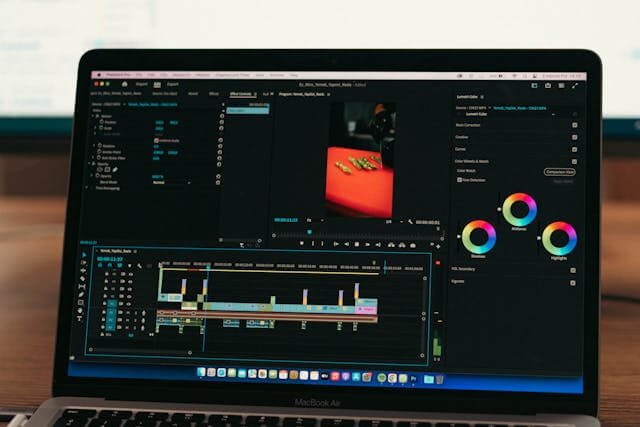
We’ve all been there. You have a great idea for a video, but then the reality of production sets in. You look at the hours of raw footage, the mountain of transcripts to sift through, and the tedious task of color grading. Honestly, it’s usually around the third hour of staring at a progress bar that the burnout starts to creep in. Suddenly, that spark of inspiration starts to feel like a heavy chore. For years, video production was a game of endurance. If you wanted quality, you had to pay for it with your time.
But the landscape has shifted. We’re entering an era where the technical barriers are falling away, replaced by tools that act less like rigid software and more like creative partners.
It is a complete shift in perspective.
These tools aren’t just about automation; they’re about liberation. They allow us to skip the “busy work” and get straight to the personalized storytelling. Have you ever wondered how much more you could create if the technical grind simply vanished? I guess we’re finally about to find out.
Flipping the Script on Editing
Traditional video editing is a linear, often exhausting process. You scrub through timelines, looking for that one perfect sentence or the moment where the lighting finally hit just right. It’s a grind. I’ve spent more nights than I’d like to admit with the hum of the laptop at midnight being the only thing keeping me company while I hunted for a single frame.
New platforms have completely reimagined this workflow. Imagine editing a video as easily as you’d edit a document. Instead of cutting clips on a timeline, you simply delete a sentence from the transcript, and the video adjusts automatically. This approach removes the friction between your thoughts and the final cut.
And that is the real magic.
You don’t need to be a technical wizard to produce a polished piece of content anymore. You just need to know what you want to say. But is a faster process enough, or do we also need it to be better? Maybe it’s both.
Beyond just cutting scenes, these tools are now handling the “invisible” tasks that consume so much energy. Removing filler words like “um” and “uh” used to take an afternoon of careful clicking. Now, it happens in seconds. You know, those tiny imperfections that make us human but make a video feel unfinished. Silences are trimmed, audio is leveled, and suddenly, a rough recording sounds like it was produced in a professional studio.
Creating From Thin Air
Sometimes the biggest time-sink isn’t editing what you have, but trying to capture what you don’t. Maybe you need a specific b-roll shot of a sunset over a city you can’t visit, or a person explaining a concept in a language you don’t speak.
We now have access to generative engines that can create cinematic scenes from a simple text description. You type in a prompt, and the system renders a high-fidelity clip that follows the laws of physics and lighting. This is a massive shift for small teams and solo creators. You don’t need a massive budget or a global travel itinerary to bring a complex vision to life.
So, what happens to the barrier to entry when anyone can visualize anything?
Furthermore, the rise of digital avatars has changed the game for educational and corporate content. Instead of hiring actors, booking a studio, and setting up lights every time you need a quick update, you can use a realistic digital presenter. You provide the script, and the avatar delivers it with natural movement and perfect lip-syncing. What used to take a full production day now takes only as long as it takes to write a few paragraphs. And that’s the point. It’s about efficiency without losing the face of the message.
Speaking to the World
The dream of a global audience used to require a massive localization budget, but that barrier is also disappearing. New AI video translator applications can now take your finished video and swap the audio into dozens of different languages while cloning your original voice and even adjusting your lip movements to match the new words.
It is a local impact on a global scale.
This means you’re able to reach a global market in minutes rather than months, ensuring your message isn’t lost in translation or hidden behind simple subtitles. Honestly, seeing your own face speak a language you’ve never studied is a little surreal. Can you imagine your voice speaking fluently to an audience halfway across the world?
The Power of Repurposing
If you’re creating content today, you know the struggle of the “platform pivot.” You film a long-form video for your main channel, but then you need a vertical version for social media, a teaser for another platform, and a highlight reel for your newsletter.
Manually re-framing and cutting these versions is a soul-crushing task. Thankfully, intelligent tools can now analyze your long-form footage, identify the most engaging moments, and automatically crop them into the correct aspect ratios. They can even generate the captions and headlines for you. This allows you to turn one hour of work into a week’s worth of content across every channel. To make these short-form clips stand out even more, creators frequently layer in Magic Hour AI face swap to superimpose themselves into trending movie scenes or viral video templates, converting basic promotional footage into high-engagement social media gold.
Why This Matters
At the end of the day, AI tools are about one thing: focus. When you’re not bogged down by the mechanics of the “how,” you can spend more time on the “why.” You can experiment more. You can take risks. You can tell stories that might’ve stayed in your head because they felt too difficult to produce.
But we have to ask ourselves: are we ready to trade the comfort of the old ways for the speed of the new?
The goal isn’t to replace the human element of video production. AI can’t feel the emotional weight of a scene or understand the nuance of a brand’s voice. But it can handle the heavy lifting. It can clear the path so that your creativity has room to breathe.
As we move forward, the most successful creators won’t be the ones with the most expensive cameras, but the ones who know how to use these tools to protect their most valuable resource: their time. Because at the end of the day, that’s all we really have.