
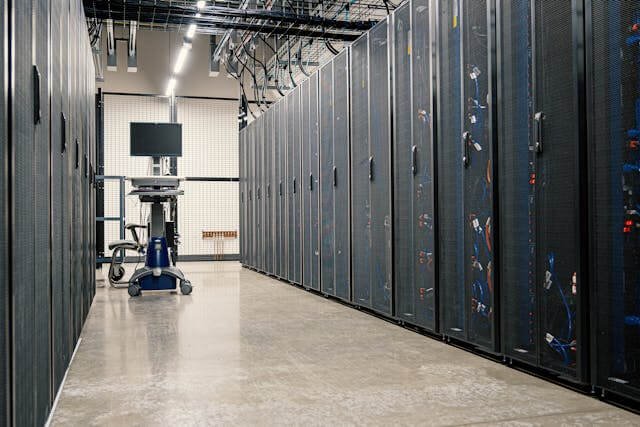
Logistics management sounds like one of those things that should just work in the background. Materials get ordered, trucks show up, crews unload, and everything moves forward. On most construction projects, that assumption holds up well enough.
Here, logistics management quickly becomes one of the most sensitive parts of the entire operation. It’s not just about getting materials on site, it’s about making sure they arrive at the exact moment they can actually be used, without disrupting everything else happening around them. When that timing is even slightly off, you start to feel it immediately, not in theory, but in people waiting, spaces getting crowded, and schedules slipping in ways that are hard to recover from.
What makes it more complicated is that these projects rarely move in a straight line. Multiple teams are working at the same time, each with their own priorities, and the environment itself keeps changing as the build progresses. That means logistics management can’t rely on static plans. It has to keep adjusting to what’s really happening on site.
Where Things Start to Go Off Track
A lot of logistics plans look solid at the beginning. Delivery windows are assigned, suppliers are aligned, and staging areas are mapped out. On paper, everything fits together.
In a data center build, space is limited and timing is tight. When one delivery arrives earlier than expected, it doesn’t just sit quietly in the corner, it takes up room that someone else needs. When something shows up late, crews don’t just shift to another task, they often end up waiting, which slows down everything connected to that phase.
It’s rarely one big mistake that causes issues. It’s the accumulation of small misalignments. A shipment that arrives before the install team is ready. Equipment that needs to be moved twice because the first staging area wasn’t ideal. Access points that become congested because multiple vendors are working from the same assumptions.
Individually, these situations seem manageable. Together, they start to create friction that spreads across the project.
This is where a more hands-on approach to logistics becomes important. Teams that operate in these environments regularly, like BluePrint Supply Chain, tend to focus less on static schedules and more on how materials actually move through the site in real time. That shift sounds subtle, but it changes how decisions get made when conditions inevitably shift.
Thinking Beyond Delivery Schedules
One of the biggest adjustments in data center logistics management is moving away from the idea that delivery equals completion. Just because something has arrived doesn’t mean it’s helping the project move forward.
What matters is how that material flows once it’s on site.
That includes where it gets placed, how often it needs to be moved, and whether it’s positioned in a way that supports the next phase of work. If those details aren’t considered early, crews end up spending time repositioning equipment instead of installing it, and that’s where efficiency quietly disappears.
A more effective way to approach this is to think through the full journey before anything is shipped. Instead of asking, “When will this arrive?” the better question becomes, “What needs to be true on site for this to be installed the moment it gets here?”
That shift forces better coordination.
Delivery timing starts to align with actual readiness, not just availability. Staging areas are chosen based on how materials will be used, not just where there is space. Teams begin to communicate more consistently because they understand how dependent their work is on each other.
It doesn’t make the project simpler, but it does make it more predictable.
The Layer Most People Underestimate
There’s another piece that tends to get overlooked, and it usually doesn’t show up until something goes wrong.
Supply chain complexity.
Data center builds depend on specialized equipment, often sourced from different regions, with long lead times and limited flexibility. If one component is delayed, it’s not always easy to replace it or adjust around it. That creates pressure across the entire schedule, especially when installation sequences are tightly linked.
In the context of data center supply, logistics management has to extend beyond the job site. It needs to account for procurement timing, inventory visibility, and backup planning in case something doesn’t arrive as expected.
This doesn’t mean building massive buffers into every timeline. It means having a clear understanding of where the risks are and staying close enough to the process to react before those risks turn into delays.
Projects that handle this well tend to keep communication lines open between suppliers, logistics teams, and on-site crews. That way, adjustments can happen early, when there are still options.
What Actually Makes the Difference
At a certain point, logistics management stops being about organization and starts being about awareness.
The teams that stay in control are usually the ones paying attention to what’s changing on site, not just what was planned weeks ago. They adjust delivery timing when conditions shift, they rethink staging when space gets tight, and they stay in constant communication with the people doing the work.
None of this is particularly complicated on its own, but it requires consistency.
It also requires accepting that the original plan will not hold perfectly, and building a process that can handle that reality without falling apart.
In data center projects, where timing, space, and coordination all matter at a high level, logistics management becomes less about moving materials and more about keeping everything connected. When that connection is strong, the project feels controlled. When it isn’t, even small issues start to multiply.
That difference is usually what separates a smooth build from one that constantly feels like it’s catching up.