
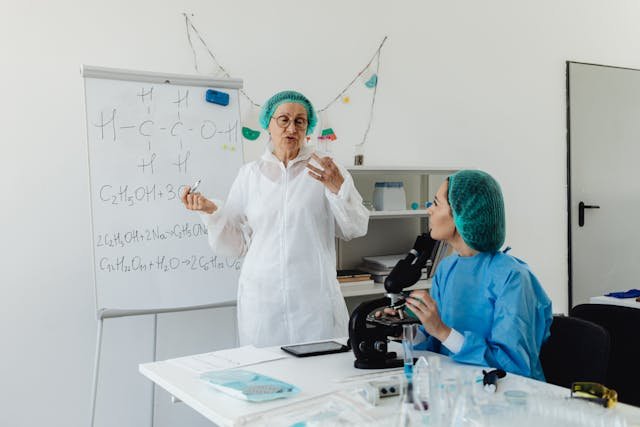
Sometimes, the biggest hurdle in chemistry isn’t the subject itself, but the sheer pace of a typical classroom. One-on-one chemistry lessons really shine here. A tutor can slow things down, making sure you really get each idea before moving on. This personalized attention means no one gets left behind. It’s all about making sure the concepts stick, not just for a test, but for good.
Targeting Specific Areas of Difficulty
Think about it: in a class of thirty, it’s tough for a teacher to spot exactly where you’re getting stuck. A tutor, though? They can zero in on those tricky bits. Maybe it’s balancing equations, understanding electron configurations, or grasping reaction mechanisms. With focused, one-on-one help, these specific areas of difficulty get the attention they need. This targeted approach prevents small confusions from snowballing into major roadblocks. Personalized attention makes all the difference.
Adjusting Pace for Optimal Comprehension
Everyone learns differently, right? Some students grasp concepts quickly, while others need a bit more time to let things sink in. A tutor can adjust the pace on the fly. If you’re nodding along, great, you can move ahead. If you’re looking a little lost, the tutor can re-explain, try a different example, or break it down further. This flexibility is key to optimal comprehension. It’s not about rushing; it’s about making sure the learning happens effectively for you.
Reinforcing Concepts Through Repetition
Repetition is a powerful tool, especially in a subject like chemistry that builds on itself. In a one-on-one setting, a tutor can provide plenty of opportunities for practice and reinforcement. They can offer extra problems, quiz you on key terms, or have you explain concepts back to them. This consistent reinforcement, tailored to your needs, helps solidify your understanding. It’s this kind of personalized attention that truly bridges learning gaps.
Tailored Instruction for Individual Needs
Diagnostic Assessments for Precise Targeting
Every student walks into a chemistry class with a unique set of knowledge and skills. Some might grasp stoichiometry with ease but stumble over equilibrium. Others might find balancing equations a breeze but struggle with understanding molecular polarity. This is where tailored instruction truly shines. Tutors begin by figuring out exactly where a student is getting stuck. This isn’t just a quick chat; it often involves diagnostic assessments. These are like mini-tests designed to pinpoint specific areas of difficulty. They help identify not just what a student doesn’t know, but also why they don’t know it. This precise targeting means time isn’t wasted on concepts already mastered.
This focused approach ensures that every minute of tutoring is spent addressing the student’s actual needs. It’s about building a strong foundation by fixing the cracks, rather than just adding more layers on top. Without this initial assessment, a tutor might guess at the problem, leading to inefficient sessions. But with a clear picture of the student’s strengths and weaknesses, the path forward becomes much clearer.
Customized Learning Paths
Once those specific learning gaps are identified through diagnostic assessments, the next step is creating a customized learning path. This isn’t a one-size-fits-all curriculum. Instead, it’s a plan built around the individual student. If a student consistently misses questions about gas laws, their learning path will include extra practice and explanations specifically on that topic. Simultaneously, if they’re doing well in organic nomenclature, that part of their learning might be reviewed less frequently or used as a stepping stone to more complex ideas. This tailored instruction ensures that the student is always working on material that is challenging but achievable.
This personalized approach means students aren’t bored by material they already know, nor are they overwhelmed by concepts far beyond their current grasp. It’s about finding that sweet spot where learning happens most effectively. The tutor acts as a guide, constantly adjusting the path based on the student’s progress and feedback. It’s a dynamic process, not a static one.
Addressing Unique Learning Preferences
Beyond just academic strengths and weaknesses, students also learn in different ways. Some students are visual learners who benefit greatly from diagrams, charts, and simulations. Others might be auditory learners who do best with clear verbal explanations and discussions. Still others are kinesthetic learners who need to do things, perhaps by working through problems step-by-step or even using physical models if available. Effective one-on-one chemistry tutoring recognizes and adapts to these unique learning preferences.
A tutor might use a digital whiteboard to draw out reaction mechanisms for a visual learner, while explaining the same concept verbally for an auditory learner. For a student who learns by doing, the tutor will guide them through practice problems, encouraging them to explain their thought process at each step. This adaptability is a key benefit of personalized tutoring. It acknowledges that there isn’t one single ‘best’ way to learn chemistry, and that tailored instruction must account for how each student best absorbs information. This makes the learning process more enjoyable and effective for everyone involved.
Engaging Abstract Concepts Through Real-World Connections
Relating Chemistry to Everyday Life
Chemistry can seem pretty out there, like something only scientists in labs think about. But really, it’s everywhere. Think about cooking – that’s chemistry. Baking a cake involves chemical reactions. Even simple things like how soap cleans or why rust forms on metal are chemistry in action. Making these connections helps students see that chemistry isn’t just textbook stuff; it’s part of their daily lives. This makes learning chemistry much more interesting.
- Understanding why food cooks differently.
- Explaining how medicines work.
- Seeing the science behind cleaning products.
When students can connect what they’re learning to things they already know or experience, the subject becomes less intimidating. It’s about showing them the ‘why’ behind everyday phenomena. This approach makes abstract chemistry concepts feel more concrete and relevant.
Visualizing Molecular Structures and Reactions
It’s tough to picture atoms and molecules doing their thing. They’re too small to see. That’s where visualization tools come in handy. Think of 3D models or computer simulations. These tools let students see how atoms bond together to form molecules and how those molecules interact during reactions. It’s like watching a molecular movie.
Visual aids transform invisible processes into understandable events, bridging the gap between theoretical knowledge and practical observation.
Seeing these processes helps students grasp complex ideas like chemical bonding or reaction mechanisms. It’s one thing to read about it, but it’s another to see it happen, even if it’s on a screen. This visual approach is key to understanding chemistry.
Making Abstract Ideas More Tangible
Sometimes, chemistry concepts are so abstract they feel impossible to get a handle on. Ideas like energy changes in reactions or the behavior of gases can be tricky. Tutors can use analogies or simple demonstrations to make these ideas more real. For example, comparing gas pressure to the number of people in a room can make the concept easier to grasp. The goal is to take those big, abstract ideas and break them down into smaller, more manageable pieces that students can relate to.
- Using analogies for concepts like entropy.
- Demonstrating reaction rates with everyday examples.
- Explaining equilibrium using a seesaw analogy.
By making abstract chemistry ideas tangible, students build a stronger foundation for understanding more complex topics later on. This hands-on or relatable approach is vital for effective learning in chemistry.
Developing Essential Cognitive Skills for Chemistry
Utilizing Analogy-Based Learning
Chemistry can feel like a foreign language sometimes, full of strange symbols and rules. One way tutors help students get a handle on it is by using analogies. Think of comparing an ion exchange to trading baseball cards – it makes the abstract idea of swapping charged particles much easier to picture. This kind of analogy-based learning helps bridge the gap between what’s in the textbook and what makes sense in the real world. It’s about finding familiar ground to explain unfamiliar concepts, making the learning process smoother.
Creating Mnemonic Devices for Memorization
Remembering all those polyatomic ions or the order of the periodic table can be a real headache. That’s where mnemonic devices come in handy. Tutors often work with students to create catchy phrases or acronyms that stick. For example, a simple rhyme might help recall the charges of common ions. These memory aids are not just for kids; they’re practical tools that help students retain important information without just rote memorization. Developing these mnemonic devices is a key part of building a strong chemistry foundation.
Building Mental Frameworks for Success
Beyond memorizing facts, chemistry requires a certain way of thinking. Tutors help students build mental frameworks, which are like mental toolkits for approaching problems. This involves understanding the ‘why’ behind chemical reactions, not just the ‘what’. By connecting different concepts and showing how they relate, students start to see the bigger picture. This structured thinking is what allows them to tackle new and complex problems, moving beyond just solving textbook examples to truly understanding chemical principles. This approach to building mental frameworks is vital for long-term success in chemistry.
Interactive Tools Enhance Understanding
Leveraging Digital Whiteboards and Simulations
Digital whiteboards and simulations are game-changers for chemistry students. They let students see things that are usually too small or too fast to observe. Think about watching molecules bump into each other or seeing a chemical reaction happen in slow motion. This makes abstract ideas much easier to grasp. These interactive tools help bridge the gap between textbook formulas and real-world chemistry. Using these tools, tutors can show how different elements behave and react, making the subject less intimidating.
Collaborative Problem-Solving in Real Time
When students work through problems with a tutor using tools like screen sharing, it’s a powerful learning experience. The tutor can show exactly how they approach a difficult question, step by step. Students can watch, ask questions, and even try solving parts of the problem themselves. This kind of interactive problem-solving builds confidence. It’s not just about getting the right answer; it’s about learning the process. This method helps students develop their own problem-solving skills for future chemistry challenges. Students who need guided practice can use TutorLyft chemistry lessons to find 1:1 private tutoring, book a free consultation, and schedule online or in-person support that fits their learning needs.
Visualizing Complex Chemical Processes
Chemistry often involves visualizing things that can’t be seen with the naked eye, like the arrangement of atoms in a molecule or the flow of electrons. Interactive tools make these complex chemical processes visible. Tutors can use 3D models to show molecular shapes or simulations to demonstrate how reactions occur. This visual approach helps students build a mental picture of what’s happening at the atomic level. It turns confusing concepts into something more concrete and understandable, making the study of chemistry more engaging.
Building Confidence and Reducing Anxiety
Creating Safe Spaces for Questions
Many students feel hesitant to ask questions in a large classroom setting. They might worry about sounding unintelligent or holding up the class. One-on-one chemistry lessons provide a private environment where students can freely ask anything that confuses them. This safe space is key to overcoming initial hurdles. Tutors are there to explain concepts in different ways until they make sense, without any judgment.
Providing Consistent Support and Encouragement
Chemistry can be a tough subject, and it’s easy for students to get discouraged. A tutor offers steady support, celebrating small victories and helping students bounce back from setbacks. This consistent encouragement helps build resilience. It’s this steady belief from a tutor that can make a huge difference in a student’s willingness to keep trying. Building confidence is a gradual process, and consistent positive reinforcement plays a big role.
Fostering Growth Mindsets in Science
Instead of thinking of intelligence as fixed, a growth mindset suggests abilities can be developed through dedication and hard work. One-on-one chemistry lessons help students see challenges not as roadblocks, but as opportunities to learn and grow. When students understand that struggling with a concept is a normal part of learning, their anxiety decreases. This shift in perspective is vital for long-term success in chemistry and beyond. This approach helps students tackle difficult chemistry topics with more determination.
The Measurable Impact of TutorLyft Chemistry Lessons
Significant Grade Improvements
Students who work with TutorLyft often see their grades go up. It’s not just a small bump either; many students report noticeable improvements within a few weeks of starting regular sessions. This boost isn’t just about passing tests; it’s about building a stronger foundation in chemistry. The focused attention helps students grasp concepts they might have missed in a larger class setting. This leads to better performance not only in chemistry but can also help with related science subjects.
Deeper Conceptual Understanding
Beyond just memorizing facts for exams, TutorLyft aims for true comprehension. Tutors work to connect different chemistry topics, showing how they relate to each other and to the real world. This approach helps students move past surface-level knowledge to a more profound grasp of chemical principles. This deeper understanding is key to tackling more complex problems and developing critical thinking skills. The measurable impact here is seen in how students approach new challenges and explain concepts in their own words.
Enhanced Problem-Solving Abilities
Chemistry is full of problems that require logical thinking and step-by-step solutions. TutorLyft lessons are designed to build these problem-solving skills. Tutors guide students through various types of problems, explaining the thought process behind each step. This practice helps students develop confidence and efficiency when faced with new or difficult questions. The ability to break down complex problems is a skill that extends far beyond the chemistry classroom, proving the lasting value of this type of chemistry tutoring.
Wrapping It Up
So, when you look at it all, one-on-one chemistry lessons really do make a difference. It’s not just about getting better grades, though that often happens. It’s about getting that personal attention that a big classroom just can’t give. A tutor can slow down when you’re stuck, explain things in a way that makes sense to you, and help you work through problems without just giving you the answers. Whether it’s online with cool digital tools or in person, that focused help builds confidence and makes those tricky chemistry ideas actually click. It turns a subject that can feel overwhelming into something you can actually understand and maybe even enjoy.