
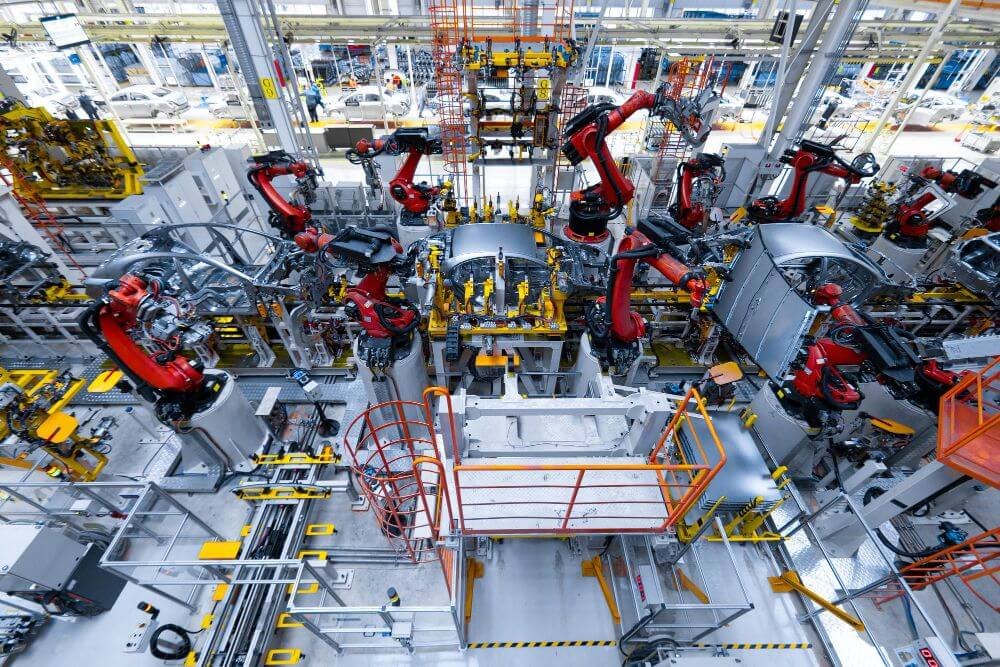
Modern factories don’t win by buying robots and calling it progress. Machines move fast, sure. Speed without discipline just makes mistakes faster. The serious plants treat automation like a loud new hire that needs training, rules, and constant coaching. Continuous improvement supplies that discipline. It turns every breakdown, scrap spike, and late truck into a lesson with teeth. Sensors, dashboards, and software can catch problems early, yet people still must decide what matters, what changes, and what gets locked in as the new standard. That’s the real contest, every single shift.
Maintenance Stops Being a Backroom Hobby
Maintenance once lived in the shadows. Modern plants drag it into daylight because automation hates surprise. The best shops tie operator routines, planned downtime, and data signals into one system that forces action. Total Productive Maintenance in 2026 is a mindset, not a poster. Operators clean, inspect, and tag issues. Techs plan fixes before failures. Engineers remove repeat causes. Robots don’t forgive neglect, and predictive alerts don’t fix anything by themselves. The point is simple. Keep assets healthy, then improve the process. That’s how uptime stops being luck, and morale rises.
Standards First, Then the Fancy Tech
Continuous improvement lives and dies on standards. No standard means no baseline, and no baseline means no learning. Automation actually makes this more brutal. A robot repeats exactly what it gets taught, including bad habits. Smart factories write work steps that a human can follow and a machine can mirror. They lock in the best-known methods, then run experiments with tight limits. One change at a time. Clear measures. Fast feedback. The tech stack only earns its keep when it protects the standard and exposes drift. Otherwise, it’s expensive noise, dressed up as progress.
Data That Starts Arguments on Purpose
Dashboards should start fights, not soothe executives. A plant that “looks green” all day usually hides waste in the gaps between metrics. Modern factories connect machine data, quality checks, and material flow, then ask awkward questions. Why does a line have a hit rate but miss a margin? Why does uptime rise while customer claims rise, too? Continuous improvement teams treat data as a suspect, not a saint. They go to the floor, watch the work, and match numbers to reality. Automation supplies facts. Humans supply judgment and nerve. That pairing beats blame every time.
Humans Don’t Disappear. They Get Sharper
Automation shifts labor from muscle to attention. That sounds polite. It’s demanding. A technician now reads trend charts, tunes vision systems, and troubleshoots networks while a line keeps moving. Continuous improvement gives structure to that pressure. Plants build skill matrices, rotate roles, and train people to spot abnormal conditions fast. They also redesign jobs so operators can make small improvements instead of filing helpless tickets. The result isn’t a factory without people. It’s a factory where people stop babysitting and start steering. Respect for people becomes a control strategy, not a slogan.
Conclusion
Factories that blend improvement with automation don’t chase gadgets. They chase stability, then they chase speed. That order matters. A stable process welcomes robots like a well-run kitchen welcomes a new oven. Recipes exist. Temperatures get checked. Mistakes get fixed at the source. Continuous improvement keeps the learning loop alive, while automation keeps the output steady and the signals loud. The winning plants treat every alarm, stoppage, and defect as a draft of the next standard. That habit scales better than any single machine purchase. Capital fades. Practice stays, and it keeps paying rent.